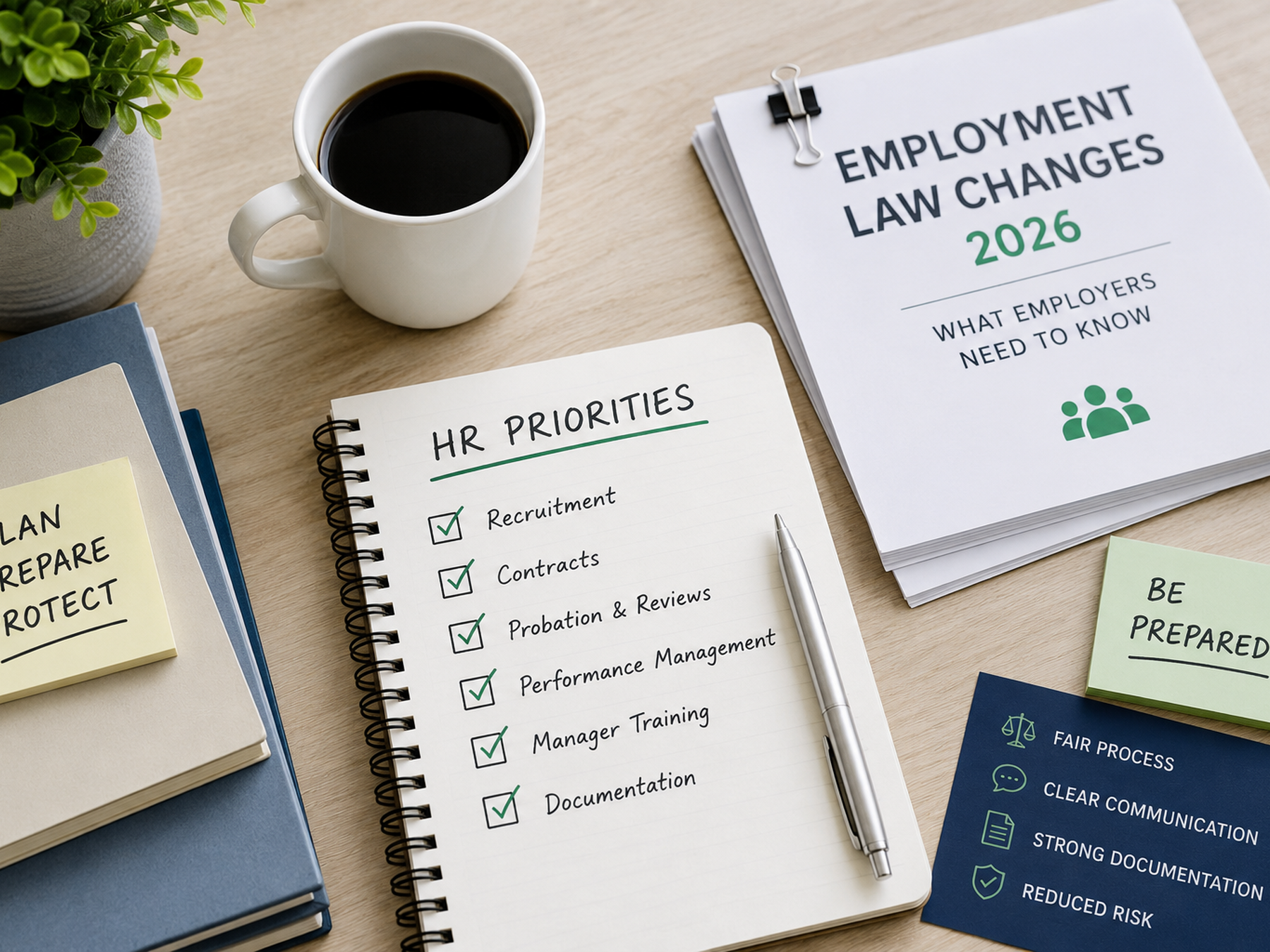
Top HR Questions About the New Unfair Dismissal Rules (2026)
1. What is changing with unfair dismissal from 1 July 2026?
The Employment Rights Bill will introduce a new "day one" right to protection from unfair dismissal, subject to an initial statutory qualifying period. Current proposals suggest employers will have a six-month qualifying period for new hires, after which employees could bring an unfair dismissal claim.
2. Can employees claim unfair dismissal after only six months?
Potentially yes. Under the proposed reforms, employees who started after 1 July 2026 may gain protection after six months' service, meaning employers will need robust processes much earlier in employment.
3. Will probation periods still be legal?
Yes. Employers can still use probation periods, but a probation clause alone will not protect against unfair dismissal claims. You will need evidence that concerns were raised, support was provided, and a fair process was followed.
4. Should we keep a 12-month probation period?
Many employers are reviewing their probation arrangements. A 12-month probation period may still have value, but businesses should ensure formal reviews take place within the first six months and that contractual wording reflects the new legal landscape.
5. What happens if an employee fails probation?
Employers will still be able to dismiss employees who are unsuitable for the role. However, they may need to demonstrate that the decision was reasonable, supported by evidence, and reached through a fair process.
6. How should managers document performance concerns?
Managers should keep written records of:
Performance discussions
Training and support offered
Improvement objectives
Review meeting outcomes
Employee responses
Good documentation can be critical if a dismissal decision is later challenged.
7. Do we need probation review meetings?
Yes. Structured probation reviews are becoming increasingly important. Employers should schedule reviews at regular intervals, document outcomes, and clearly communicate expectations from day one.
8. Can we dismiss someone during probation without a warning?
The law is moving away from informal dismissals. While every case depends on the circumstances, employers should generally ensure concerns are raised and employees are given an opportunity to improve before dismissal.
9. What should be included in a probation process?
A robust probation process should include:
-
Clear performance standards
- Regular review meetings
- Written feedback
- Training and support
- Extension procedures where appropriate
-
Final review meeting
- Documented decision making
10. How do the new rules affect recruitment?
Recruitment decisions become even more important because employers may have less flexibility to dismiss unsuitable hires later. Businesses should review:
-
Interview processes
- Selection criteria
- Reference checks
- Skills assessments
- Onboarding procedures
11. What should employers do before July 2026?
Key actions include:
-
Reviewing contracts and probation clauses
- Updating employee handbooks
- Training managers
- Introducing structured probation reviews
- Improving documentation processes
- Auditing recruitment procedures
12. What is the average compensation for unfair dismissal?
Recent tribunal statistics show:
Average award: approximately £13,749
Median award: approximately £6,746
Maximum compensatory award cap: £118,223 (subject to annual updates)
The overall cost is often much higher once legal fees, management time, disruption, and recruitment costs are considered.
13. Are small businesses affected by the new unfair dismissal rules?
Yes. The changes are expected to apply regardless of business size. Small businesses may feel the impact more acutely because employment disputes can consume significant time and resources.
14. Can employers still dismiss employees for poor performance?
Yes. The proposed changes do not prevent employers from dismissing underperforming employees. The key difference is that employers will need stronger evidence and a clearer process to demonstrate fairness.
15. How can we prepare our managers for the new rules?
Employers should provide training on:
-
Conducting probation reviews
- Performance management
- Documentation standards
- Difficult conversations
- Fair dismissal procedures
- Employment law updates
How HR Branch Can Help
Navigating employment law changes can feel overwhelming, especially when you're focused on running your business. The good news is that you don't have to tackle these changes alone.
At HR Branch, we help employers turn legal requirements into practical people processes that protect their business and support their teams.
Whether you're reviewing contracts, updating probation procedures, training managers or strengthening performance management processes, our HR specialists provide straightforward advice tailored to your organisation.
We can help you:
✓ Review employment contracts and probation clauses
✓ Audit your recruitment and onboarding processes
✓ Implement effective probation review procedures
✓ Train managers on performance management and documentation
✓ Update policies and employee handbooks
✓ Support difficult employee relations issues
✓ Reduce the risk of employment tribunal claims
✓ Stay compliant with changing employment legislation
The changes coming in 2026 mean that employers will need stronger processes, clearer documentation and more confident managers. By preparing now, you can reduce risk, improve employee performance and protect your business from costly disputes.
If you're unsure whether your current processes are fit for purpose, HR Branch can provide a confidential review and practical recommendations to help you get ahead of the changes.